From early development to full scale commercial supply, our fermentation experts partner closely with customers to define robust, scalable solutions for complex fermentation-based molecules. Supported by a globally integrated CDMO network and long-standing operational continuity, we bring what matters most: scientific depth, manufacturing reliability, and consistent quality.
Your Partner for
Fermentation Based APIs
Backed by decades of industrial fermentation experience and commercial scale infrastructure, TAPI is ready to support your fermentation development and manufacturing needs.

Small molecules

Peptides

Enzymes
Fermentation at TAPI
A Legacy of Delivering Results
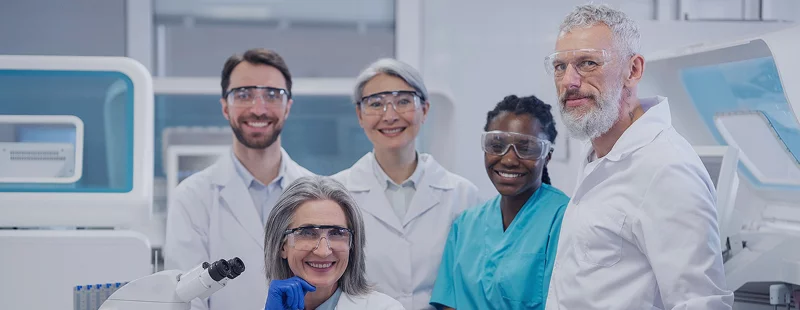
TAPI’s fermentation heritage spans decades of industrial manufacturing, supporting complex pharmaceutical programs from microbial process development through commercial production. Our experience covers a broad range of fermentation-derived APIs, including antibiotics, cholesterol-lowering compounds, immunosuppressants, and other specialized product categories like enzymes or peptides.
Our platform integrates classical and genetic strain development with automated high-throughput screening and continuous investment in advanced molecular biology capabilities. This foundation enables efficient development, reliable scale-up, and long-term supply under controlled pharmaceutical manufacturing conditions.
Capabilities
Microbs small in size, vast in potential
Built to support complex fermentation programs with the scientific depth, GMP-ready infrastructure, and process control needed to move from development to commercial supply.
- End to end fermentation CDMO offering strain development through commercial manufacturing.
- Advanced upstream process control and data driven optimization.
- Flexible downstream purification strategies across diverse molecule types.
- Integrated analytical development supporting process understanding and compliance.
Small Molecules
Development and manufacturing capabilities for fermentation-derived small molecules, including secondary metabolites.
- Producer strain design, construction, and improvement using classical microbiology and targeted genetic modification
- Experience with diverse microbial hosts, including bacteria, filamentous bacteria, filamentous fungi, and yeasts
- Automated high-throughput screening for strain selection, characterization, and process optimization
- Fermentation development from 0.5 mL high-throughput wells and shake flasks to 1,000 L pilot scale
- Online monitoring of dissolved oxygen, pH, biomass, and feeding during development
- Industrially focused process development supporting reliable scale-up
- Flexible downstream processing for large volumes, including preparative and ion-exchange chromatography
- Specialized analytical support, including impurity isolation
Peptides
Recombinant production development for peptides using established and emerging microbial expression systems.
- Host selection and expression development across bacteria and yeasts
- Routine use of E. coli, with additional capabilities in Saccharomyces cerevisiae and Pichia pastoris
- Classical and advanced molecular biology techniques, including CRISPR
- Multiple in-house cloning approaches, including restriction enzyme and ligation methods, Gibson Assembly, and Golden Gate Assembly
- Several transformation methods supporting a broad range of microorganisms
- Automated screening and characterization to identify suitable producer strains and expression conditions
- Fermentation development from high-throughput laboratory screening through pilot-scale production
- Integrated downstream and analytical development supporting purification and process understanding
Enzymes and Biocatalysis
An end-to-end platform supporting enzyme discovery, engineering, expression, and implementation in GMP manufacturing.
- Full chemo-enzymatic route of synthesis scouting for GMP implementation of APIs
- Expanding expertise across 22 enzyme types expressed in-house
- Competitive in-house enzyme expression platform, with titers of 6–10 g/L achieved using E. coli
- Reliable kilogram-scale expression of KREDs, , nitrilases, and IREDs
- Expression in alternative hosts, including S. cerevisiae and P. pastoris species
- High-throughput enzyme evolution using site-saturation libraries, combinatorial, and random approaches
- AI- and physics-based modeling for enzyme engineering
- Engineered properties constitute e.g. catalytic activity, stereoselectivity, level of soluble expression
- Extensive analytical support for enzyme characterization

Shared Technology Platform
Across all three molecule types, TAPI’s development platform is supported by:
- Biolog: high-throughput microbial characterization
- VIAFLO: electronic pipetting
- Hamilton: automated liquid handling
- QPix: automated colony picking
- RapidFire: high-throughput mass spectrometry-based analytics
- PreSens: online dissolved oxygen and pH monitoring
- Liquid Injection System: controlled feeding in shake flasks
- Multiparameter Sensor: online biomass measurement
Capacity
Scale Without Delay
TAPI operates two dedicated fermentation sites designed to support projects from early development through large scale commercial manufacturing. Modular infrastructure and harmonized process controls enable efficient scale up and smooth technology transfer across program stages.
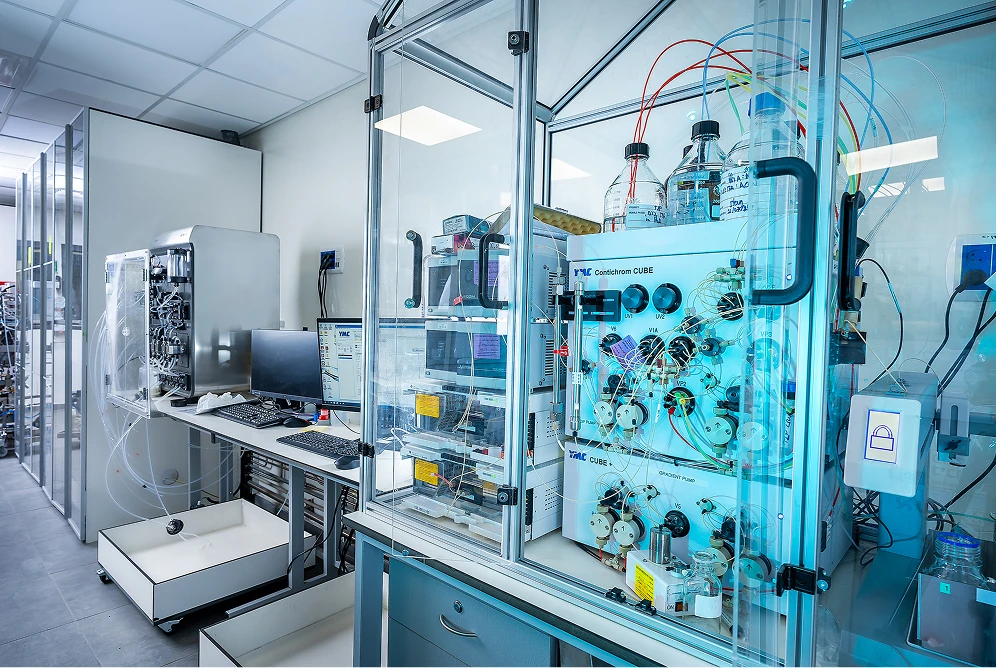
- Integrated upstream, downstream, and analytical operations
- Development and GMP manufacturing capabilities across multiple scales
- Proven readiness for long-term commercial supply
- Regularly audited sites with a strong regulatory track record, including successful FDA inspections
Ready When You Are
“A multidisciplinary team with decades of fermentation experience, committed to unlocking the full potential of microbial technologies.”
Bioengineer & Fermentation Subject Matter Expert
22 years in TAPI
22 years in TAPI
Why TAPI For Fermentation
Built for Scale. Backed by Experience. Ready to Deliver.

Decades of industrial fermentation manufacturing experience, with large-scale bioreactors ranging from 150L to 115,000 L, supporting robust and reproducible commercial production.

Full GMP compliance and regulatory readiness for global submissions, supported by regularly audited sites and long-standing regulatory experience.

Proven track record across fermentation-based molecules, with more than [30+] products successfully commercialized, from kilogram to multi-metric ton scale.

Integrated expertise across microbiology, molecular biology, upstream and downstream processing, ensuring deep process understanding and end-to-end control.

Seamless progression from development to commercial production, enabled by structured technology transfer and harmonized processes across development, pilot, and GMP manufacturing.

Flexible infrastructure supporting multiple microbial species, including E. coli and other industrially relevant hosts.